Saturday, 28 November 2015

Imran Farhat

 Imran Farhat Biography

source link (google.com.pk)

Imran Farhat, Cricketers is famous for Cricket, Pakistani celebrity. Born on 20 May, 1982

A gifted young left-handed opener who threatened at one stage to solve Pakistan's perennial opening conundrum, Imran Farhat had a brief spell in the Pakistan side after success with the national under-19 and A sides. Farhat also evokes Saeed Anwar but only fleetingly; he bludgeons rather than times his runs. He was rather too cavalier in his early appearances in the Test arena, and was promptly discarded after the tour to New Zealand in 2000-01.  


 However, he tightened his game and achieved much more success in the 2003-04 season. Tempering his impressive array of shots with better defensive technique, Farhat scored a deluge of runs in the home series against South Africa and New Zealand, being involved in a record four successive hundred partnerships with Yasir Hameed in the one-day internationals against New Zealand.


   He also notched up his first century in both Tests and ODIs during this season, and then went on to score a vital 101 in Pakistan's victory against India in the Lahore Test. But since the India series, he has fallen away. A mediocre series at home to Sri Lanka and away to Australia saw him falter, especially with the emergence of the other left-handed opener, Salman Butt.


 When Pakistan included only one specialist opener in the squad for the series against England in 2005 - Butt - seemingly it confirmed that Farhat, temporarily, was out of national reckoning. But as an opener in Pakistan, you are never out of national reckoning and sure enough Farhat was back for the final Test against India, where he scored a fifty. That performance saw him on the plane to Sri Lanka and an average series. But with openers becoming as rare as dinosuars in Pakistan, he was retained for the summer tour to England, where he again produced some mixed results. Despite failures in the first two Tests, a broken finger and a spate of dropped catches, he came back to score a cavalier 91 in the final, fateful Oval Test. Runs against West Indies at home were followed by a barren patch in South Africa.


 A first away hundred followed by a patient half-century in the Napier Test of 2009 has set him up for a long sojourn in the Test side. His ODI career has however hit roadblocks since he was dropped after an indifferent run of scores in 2006.

Imran Farhat


Imran Farhat


Imran Farhat


Imran Farhat


Imran Farhat


Imran Farhat


Imran Farhat

Imran Farhat

Imran Farhat


Imran Farhat

Imran Farhat

Waqar Younus

 Waqar Younus Biography

source link (google.com.pk)

Waqar Younis, Cricketers is famous for Cricket, Pakistani celebrity. Born on 16 November, 1971


Waqar Younis Maitla is a former Pakistani right arm fast bowler in cricket and widely regarded as one of the best fast bowlers of all time.


He was best known in cricket for his ability to reverse swing a cricket ball at high speed when bowling at the cricket pitch. He took 373 Test wickets and 416 One Day International wickets during his career. He is considered to be the best exponent of the swing bowling delivery. Younis has the best strike rate for any bowler with over 200 Test wickets. He worked as a bowling coach with the national side from 2006 to 2007.


Younis was appointed as the coach of the Pakistan cricket team on 3 March 2010. His managerial contract with the Pakistan Cricket Board will take part in all forms of cricket, right up to December 2011, which will include all professional competitions, such as the 2011 Cricket World Cup.


He made his International cricket debut for Pakistan against India on 15 November 1989, in the same match that Indian batsman Sachin Tendulkar also made his debut. Younis took 4 wickets in the drawn match including the wickets of Tendulkar and Kapil Dev. He made an immediate impression with his speed and became known in the cricket media as "Wiki" or the "Burewala Express". Younis along with Wasim Akram opened the bowling attack regularly for Pakistan, becoming a feared and potent attack. His most recognized delivery was an inswinging yorker. At his peak, he developed into a very quick fast bowler and also became famous for achieving a hat-trick in a One Day International match against New Zealand in 1994. He won the English County Championship with Glamorgan in 1997. During the early periods of 2000, he stayed out of the Pakistan team for a brief period allegedly due to suspension and conflicts with bowling partner and captain Wasim Akram. His return to cricket came with him being appointed the captain of Pakistan, a position he held until his team failed to make an impact in the 2003 Cricket World Cup. He retired from cricket in 2003 after the Pakistan Cricket Board persistently ignored him for national selection.


Waqar's first job as coach was to lead an inexperienced Pakistan side missing Younis Khan, Mohammad Yousuf and Shoaib Malik to the 2010 ICC World Twenty20 as a consolation though Waqar had two top-notch bowlers in Mohammad Amir and Mohammad Asif at his disposal. He guided the defending champions to the semi-final of the tournament before the were knocked out by Australia courtesy of a superb 60* by Mike Hussey who whacked three sixes in the final over to seal the victory.


The World Twenty20 was followed with the 2010 Asia Cup in which Pakistan lost to Sri Lanka by a narrow-margin as Pakistan's top order collapsed and it was Shahid Afridi who scored 112 to nearly guide Pakistan to victory. In the following match Pakistan lost narrowly against India courtesy of a six by Harbhajan Singh an the third ball of the final over. The following match was a dead rubber between Pakistan and Bangladesh and another Afridi century meant Pakistan scored 385 runs and they comfortably won the match by 139 runs


After this a tour of England followed with two Twenty20's against Australia and two Test matches. Pakistan won both Twenty20's comfortably and the first test saw Pakistan defeated by 154 runs. Pakistan rallied in the second test and for the first time in 15 years Pakistan defeated Australia in a Test match. Ironically the previous victory in 1995 was also courtesy of a superb bowling spell by Waqar Younis


This tour was followed by a controversial tour against England as Pakistan headed in to the final Test match needing to win it to level the series 2-2 the News of the World broke a story that Mohammad Amir, Mohammad Asif and captain Salman Butt were involved in Spot-fixing. This saw the three players temporarily suspended and Pakistan lost by an innings and 225 runs their biggest defeat in history. Low team-morale meant the next two T20 matches were won comfortably by England. Following an ODI series which Pakistan lost 3-2.


This was followed by a tour of Abu Dhabi playing against South Africa Pakistan lost the first Twenty20 match by six-wickets following a batting-collapse which meant that no partnerships were formed. Pakistan also lost the ODI series of five matches by 3-2. Pakistan won the second one day due to Abdul Razzaq's superb performance scoring 109* off 72 ball. The test series of two matches with South Africa was drawn. He also stated that now it was the time for Pakistan to rally and prepare for the World Cup


Despite his qualities as a fast bowler, he was expensive at times and sometimes lacked the consistency of bowlers such as West Indian fast bowler Curtly Ambrose and Australian fast bowler Glenn McGrath. This may be partly due to the mentality of his former captain, Imran Khan, who prioritised aggression and speed.


Award and records

See also: List of international cricket five-wicket hauls by Waqar Younis

Younis was awarded Wisden Cricketers of the Year in 1992 for his sporting achievements. He is also the only bowler to have taken a 5 wickets in an innings in 3 consecutive One Day International matches. He has taken a 5 wicket hauls on 13 occasions in One Day International matches. In terms of deliveries bowled, he has taken the fastest 50, 300, 350 and 400 wickets in One Day International matches and the fastest 150, 200, 250, 300 and 350 wickets in Test matches.


Although primarily a fast bowler, Younis scored 1010 Test match runs during his career. As of September 2005, he was the only non-batsman to achieve a thousand runs without scoring a fifty.


Younis holds the record for the best strike rate for any bowler with over 200 Test wickets.


Cricket controversies

In July 2000 Younis became the first cricketer to be banned for ball tampering and was fined 50% of his match fee.


There has been some controversy about his date of birth and age. According to ESPN cricinfo sports, Younis was born in 1969 and others including Yahoo! Cricket and CricketArchive claims he was born in 1971.


Waqar Younus


Waqar Younus


Waqar Younus


Waqar Younus


Waqar Younus


Waqar Younus


Waqar Younus


Waqar Younus


Waqar Younus


Waqar Younus


Waqar Younus

Shahid Afridi

 Shahid Afridi Biography

soure link (google.com.pk)

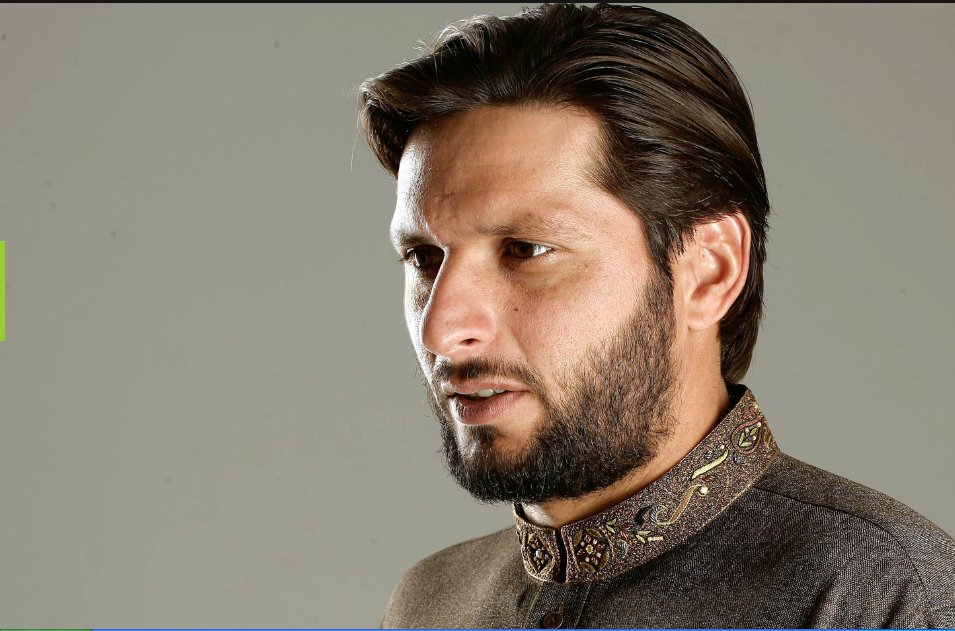
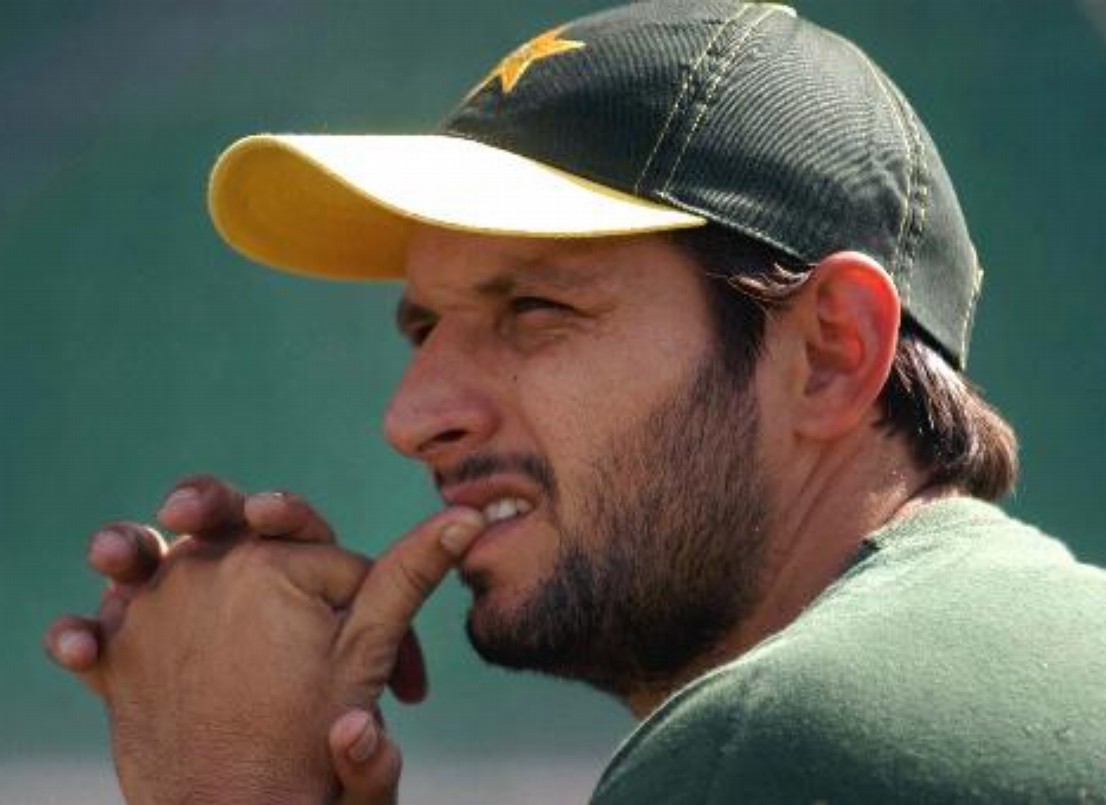
Shahid Khan Afridi, Cricketers is famous for Cricket, Pakistani celebrity. Born on 1 March, 1980


Sahibzada Mohammad Shahid Khan Afridi born in Khyber Agency of the Federally Administered Tribal Areas, Pakistan), popularly known as Shahid Afridi is a Pakistani cricketer. Between 1996 and 2011, Afridi played 27 Tests, 325 One Day Internationals, and 43 Twenty20 Internationals (T20Is) for the Pakistani national team. He made his ODI debut on 2 October 1996 against Kenya and his Test debut on 22 October 1998 against Australia.


He is known for his aggressive batting style, and holds the record for the fastest ODI century which he made in his first international innings, as well as scoring 32 runs in a single over, the second highest scoring over ever in an ODI. He also holds the distinction of having hit the most number of sixes in the history of ODI cricket. Afridi considers himself a better bowler than batsman, and has taken 48 Test wickets and over 300 in ODIs. Currently Afridi is the leading wicket taker in the Twenty20 format taking 53 wickets from 43 matches.


In June 2009 Afridi took over the Twenty20 captaincy from Younus Khan, and was later appointed ODI captain for the 2010 Asia Cup. In his first match as ODI captain against Sri Lanka he scored a century however Pakistan still lost by 16 runs. He then also took over the Test captaincy but resigned after one match in charge citing lack of form and ability to play Test cricket; at the same time he announced his retirement from Tests. He retained the captaincy in limited-overs form of the game and led the team in the 2011 World Cup. Amongst his highlights while captaining Pakistan include leading the team to their first ODI series win in two-years. In May 2011, having led Pakistan in 34 ODIs Afridi was replaced as captain. Later that month he announced his conditional retirement from international cricket in protest against his treatment by the Pakistan Cricket Board (PCB).


Afridi is from the Afridi tribe of the Khyber Agency in the Federally Administered Tribal Areas and hails from a Pashtun family. He is married and has two daughters, Aqsa and Ansha.


In October 1996 at the age of sixteen Afridi was drafted into the ODI team during the four-nation Sameer Cup 1996–97 as a leg spinner as a replacement for the injured Mushtaq Ahmed. He made his debut on 2 October against Kenya, however he didn't bat and went wicketless. In the next match against Sri Lanka, Afridi batted at number three in the role of a pinch-hitter. In his first international innings, Afridi broke the record for fastest century in ODI cricket, reaching his hundred from 37 balls. The eleven sixes he struck also equalled the record for most in an ODI innings. Aged 16 years and 217 days, Afridi became the youngest player to score an ODI century. Pakistan posted a total of 371, at the time the second-highest in ODIs, and won by 82 runs; Afridi was named man of the match.


Two years after appearing on the international scene, Afridi made his Test debut in the third game of a three-match series against Australia on 22 October 1998. By this point he had already played 66 ODIs, at the time a record before playing Tests. He opened the batting, making scores of 10 and 6, and took five wickets in the first innings. He played his second Test the following January during Pakistan's tour of India; it was the first Test between the two countries since 1990. Again opening the batting, Afridi scored his maiden Test century, scoring 141 runs from 191 balls. In the same match he also claimed three wickets for 54 runs. After winning the first match by 12 runs, Pakistan lost the second to draw the series.


In 2001, Afridi signed a contract to represent Leicestershire. In five first-class matches he scored 295 runs at an average of 42.14, including a highest score of 164, and took 11 wickets at an average of 46.45; Afridi also played 11 one day matches for the club, scoring 481 runs at an average of 40.08 and taking 18 wickets at 24.04. His highest score of 95 came from 58 balls in a semi-final of the C&G Trophy to help Leicestershire beat Lancashire by seven wickets.Derbyshire County Cricket Club signed Afridi to play for them in the first two months of the 2003 English cricket season. In June 2004 Afridi signed with English county side Kent to play for them in three Twenty20 matches and one Totesport League match.


Afridi made his presence felt in the third Test against India in March 2005, scoring a quick-fire second-innings half-century and taking five wickets in the match (including Tendulkar twice) to help Pakistan to win the game and register a series draw. In April Afridi struck what at the time was the equal second-fastest century in ODIs; he reached 100 off 45 deliveries against India, sharing the record with West Indian Brian Lara. Afridi was more consistent with his batting and bowling throughout 2005, starting with the tours of India and West Indies and through to the England tour. The Pakistani coach Bob Woolmer helped Afridi to reach a fuller potential by improving his shot selection and giving him free rein over his batting attitude.


Shahid Afridi


Shahid Afridi


Shahid Afridi


Shahid Afridi


Shahid Afridi


Shahid Afridi


Shahid Afridi


Shahid Afridi


Shahid Afridi


Shahid Afridi


Shahid Afridi